Toyota Urban Cruiser Hyryder Hybrid: Compact SUV buyers are now closely tracking real fuel economy, long-term reliability, and monthly fuel spend, and this hybrid option fits directly into that thinking. Rising petrol prices have pushed families to look beyond turbo-petrol mileage figures, especially for daily city driving. The 27Km/L certified mileage changes ownership math in a meaningful way, reducing fuel expenses without forcing buyers into full EV charging dependence. In 2026, this balance between efficiency and familiar driving experience is driving renewed demand.
Design and Build Quality
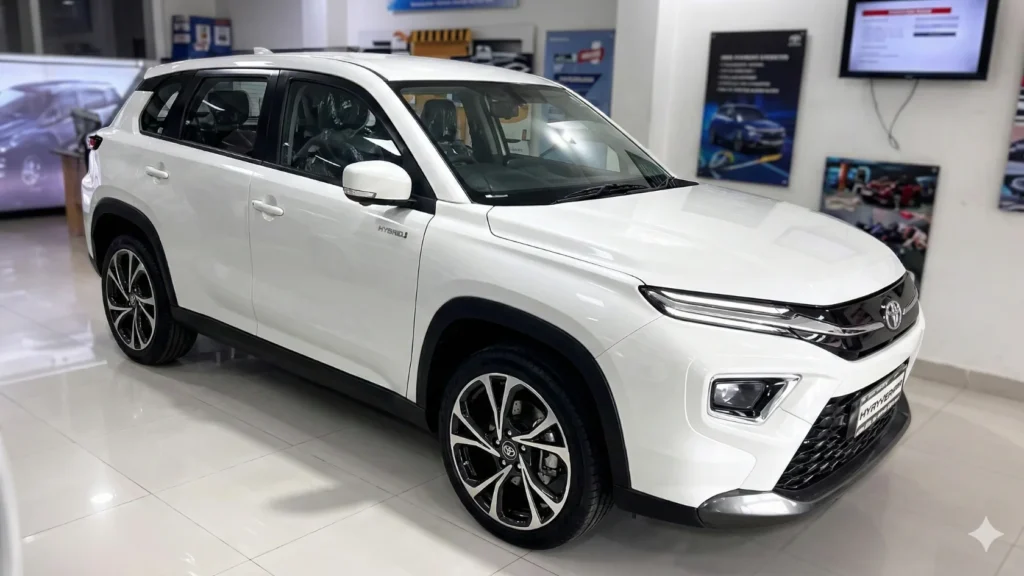
The exterior design focuses on a strong SUV stance with practical proportions rather than aggressive styling. High ground clearance helps with rough city roads and speed breakers, while the compact footprint keeps it manageable in traffic. Panel fit and paint quality feel solid, aligning with Toyota’s reliability image. The upright stance improves road visibility, which is useful for family driving. Overall build quality prioritises durability over cosmetic drama, which suits long-term ownership.
Interior and Cabin Experience
Inside, the cabin layout is functional and easy to understand. Seat cushioning supports long drives without causing fatigue, and the rear seat offers sufficient knee room for small families. Boot space remains practical for grocery runs and weekend luggage, though hybrid components slightly reduce total capacity. AC performance is strong, which matters in Indian summers. Noise insulation during city driving is noticeably better than typical petrol-only compact SUVs.
Hybrid System, Engine and Mileage
The strong-hybrid setup combines a 1.5-litre petrol engine with an electric motor and e-CVT gearbox. In city conditions, the car frequently runs in electric-only mode at low speeds, which is the main reason behind the 27Km/L mileage figure. Power delivery feels smooth rather than sporty, focusing on efficiency. Highway cruising remains relaxed, with the petrol engine taking over seamlessly. For daily urban usage, fuel savings are clearly visible compared to standard petrol SUVs.
Performance and Driving Behaviour
Acceleration is tuned for smoothness, making stop-and-go traffic less tiring. Steering remains light at city speeds and stable on highways. Suspension tuning handles broken roads well without excessive body roll. The hybrid system automatically manages power flow, so drivers do not need to change driving habits. This makes it suitable for buyers upgrading from conventional petrol cars without a learning curve.
Safety and Technology Features
Safety features include multiple airbags, ABS with EBD, stability control, and traction assistance systems. The body structure feels stable at highway speeds, adding confidence for family travel. Technology features focus on daily convenience, including a touchscreen infotainment system, digital instrument cluster, and connected car functions. Driver assistance features support urban driving without overwhelming the user with complex settings.
Price and EMI Reality in 2026
In 2026, the hybrid variant’s on-road price typically falls in the ₹19.50 lakh to ₹21.00 lakh range depending on city and trim. With a ₹3.00 lakh down payment, the loan amount comes to around ₹17.00 lakh. On a 60-month tenure at roughly 9.5 percent interest, the EMI works out close to ₹36,000 per month. With real-world mileage near 25–27Km/L, monthly fuel costs drop significantly compared to petrol SUVs, improving overall ownership affordability for families.
Disclaimer: The information provided in this article is for general informational purposes only. Specifications, mileage figures, pricing, and finance terms may vary by city and variant. Buyers should verify details with authorised Toyota dealers before making a purchase decision.