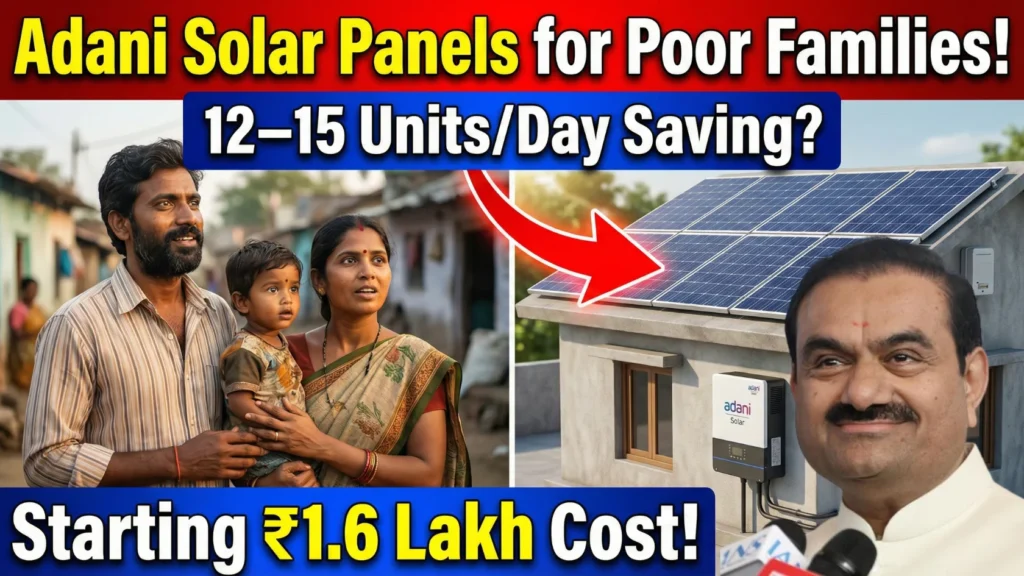
Adani solar panels are getting attention among poor and middle-class families because the biggest problem is not “electricity usage,” it is the monthly bill pressure. When people hear numbers like 12–15 units per day from a rooftop system, they immediately calculate whether solar can replace a big part of their bill. The truth is, solar can reduce bills strongly, but daily units depend on system size and sunlight. A realistic way to think about it is simple: choose a system size that matches your home’s daily consumption, and then the savings become predictable instead of hype-driven.
Design and Build Quality
For rooftop solar, the real build quality is the full installation, not only the panel brand. A strong mounting structure matters because wind and storms can damage weak frames. Proper wiring, earthing, and safe inverter placement decide whether the setup runs for years without issues. Poor families want a system that does not create repair stress, so the best installs use weather-resistant cables, tight connectors, clean routing, and safety protection that prevents short-circuit and surge problems.
Installation Cost and Daily Output Reality
Here is the honest output math. A single 600W panel typically generates around 2.4–3.0 units per day in many Indian conditions, assuming about 4–5 peak sun hours and normal losses. If someone is talking about 12–15 units per day, that usually points to a 3kW system range, like five 600W panels = 3kW. Cost depends on inverter quality and structure, but a typical home installation can land around ₹55,000–₹70,000 per kW, so a 3kW setup often falls near ₹1.6–₹2.1 lakh before subsidy in many markets.
Subsidy and Savings Logic
Subsidy is what can make solar feel “possible” for poor and middle-class households. When subsidy applies, the upfront cost reduces and payback becomes faster. Savings depend on how much your home consumes and how much solar generates. If your home uses around 10–15 units daily, a 3kW system can cover a large portion of that in good sunlight. The more sunlight your roof gets and the less shading you have, the more stable your savings will be month after month.
Features and Safety Features
A safe solar setup should include proper earthing, MCB protection, surge protection, and a reliable inverter with overload safety. Net metering support is a big advantage where available, because extra units can be exported to the grid, reducing effective billing further. Monitoring through an app or generation display is also important, because dust, shade, or wiring issues can reduce output silently. For poor families, early detection matters because small issues can turn into expensive repairs if ignored.
Price, EMI, and What Poor Families Should Confirm
If the final installed price after subsidy comes down, many families prefer EMI to avoid heavy upfront spending. For a 3kW system, EMI often falls around ₹3,999–₹6,999 per month depending on tenure, interest, and subsidy timing. Before paying, families should confirm three numbers: total system size in kW, expected daily units range for their city, and the all-in installed price including inverter, structure, wiring, and paperwork. Once these are clear, Adani solar becomes simple monthly math—and that is where poor and middle-class households get real bill relief instead of viral promises.